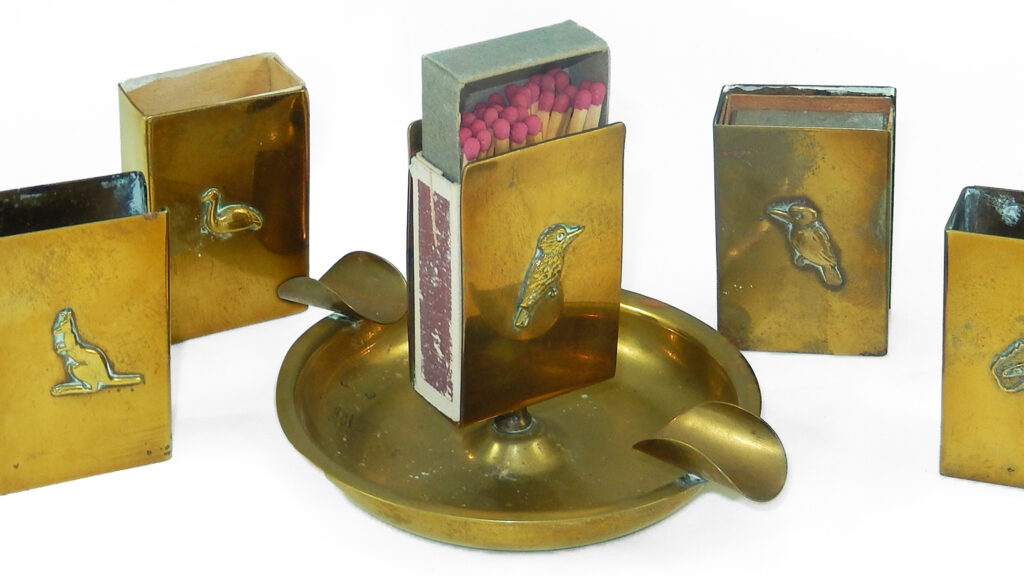
Four brass matchbox covers and an ashtray (c. 1916-1918) held in Elsie White’s bedroom at Saumarez Homestead in Armidale are a small reminder of a generation who lived and fought through World War One. They are part of a disparate collection of objects categorised as ‘Trench Art,’ an object made by people from any material […]
Read More…
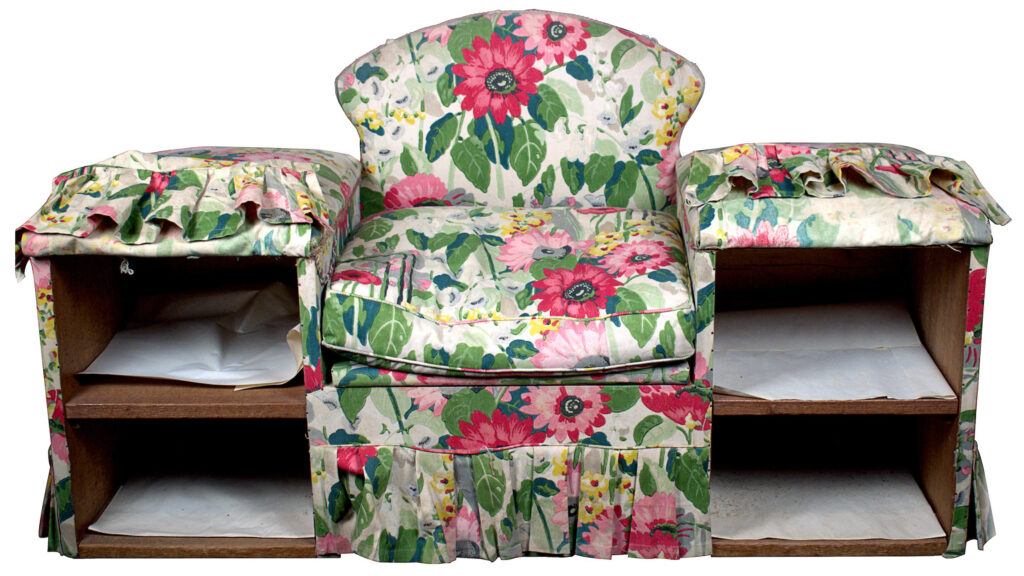
‘Make-do’ or ‘makeshift’ chairs, like the examples pictured here, were a product of the Depression-era and an inventive way to provide both seating and storage in the home. This type of chair was illustrated in Makeshifts, a booklet published in 1925 outlining how to build one. More often made from used kerosene packing cases as […]
Read More…
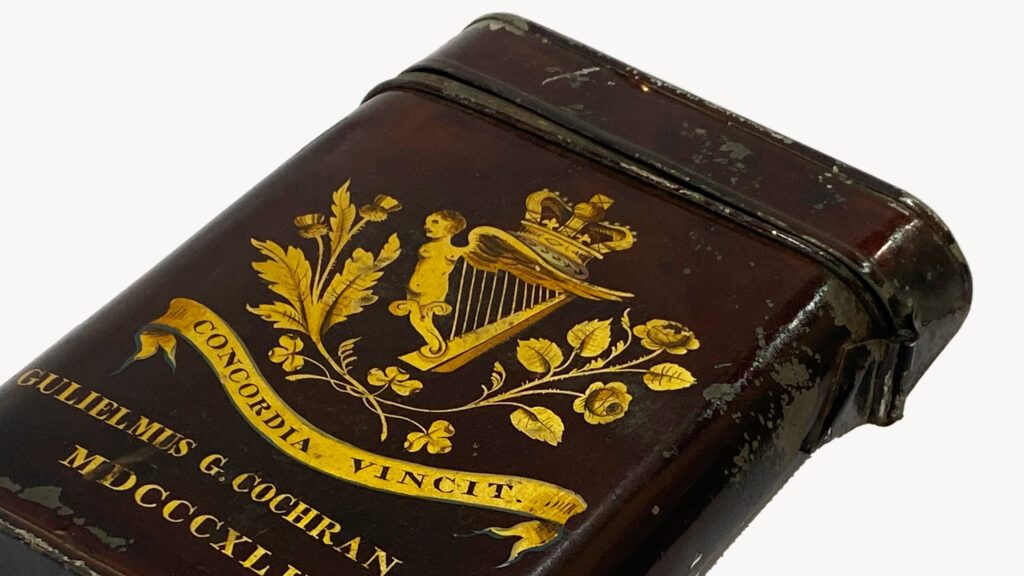
It was a proud and decisive moment, probably in the early 1850s, when the young William Cochrane grasped this fancy hand painted tin canister, slid open its hinged lid and carefully inserted his folded university documents inside its compartment. That day, William’s whole life was ahead of him – he had two degrees and further […]
Read More…
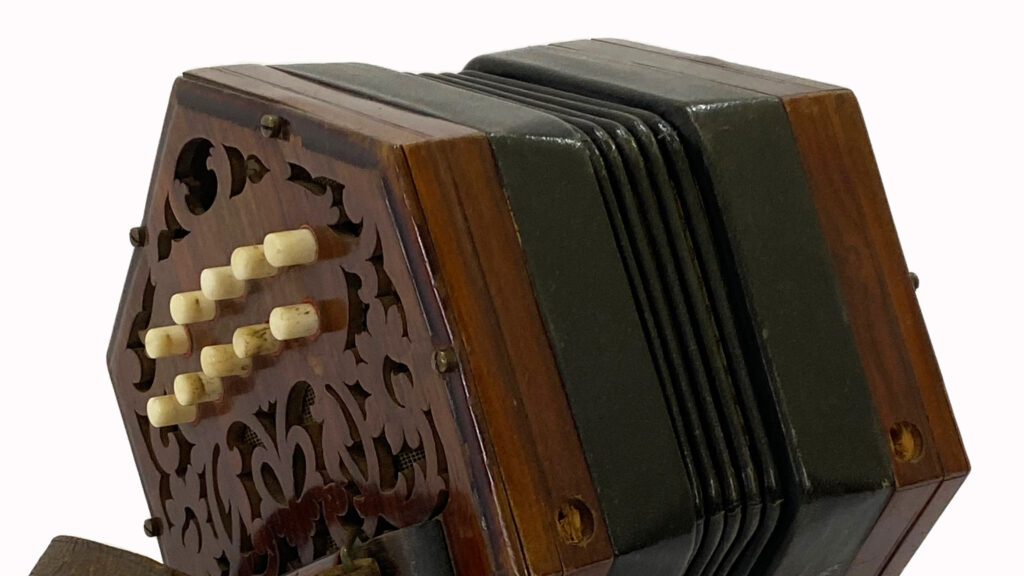
It was likely one evening in the 1890s that William Pymont Brook (1865-1938), a Cobb & Co clerk, first sat down with this two-row hexagonal concertina on his lap. With his fingers resting gently on its buttons, William pulled apart its bellows, then squeezed them together, and the instrument threw out some forceful notes. It […]
Read More…
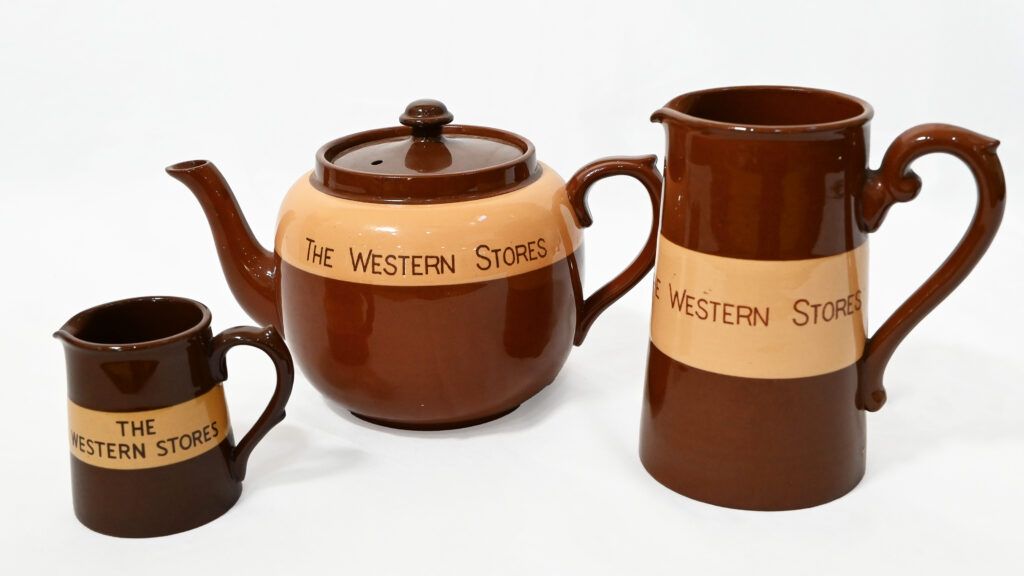
One lucky customer who shopped at Western Stores, Bathurst was the recipient of this teapot and these jugs, probably given to them by the manager as a show of goodwill for the customer’s support. These may not have been the prettiest pieces of earthenware displayed on that customer’s kitchen dresser, but they were a reminder […]
Read More…
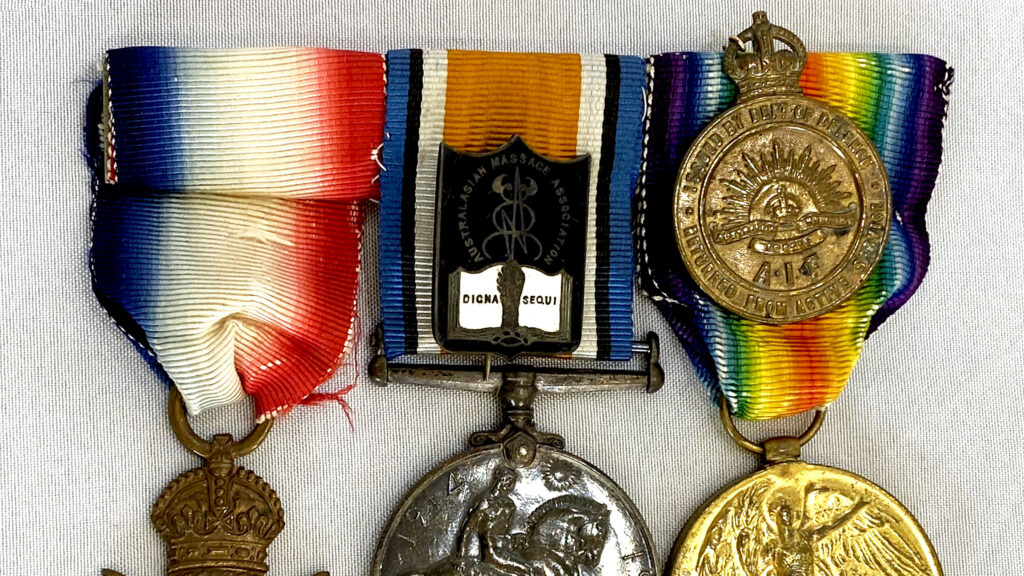
Three service medals awarded to Bathurst-born Irene Stoddart (1880–1957) recognise the contribution she made as a nurse during WWI. Nurse Stoddart may have been especially proud of the 1914-15 Star, which recognises her service prior to 31 December 1915. A small lapel pin with the motto ‘digna sequi’ gives a clue to her role during […]
Read More…
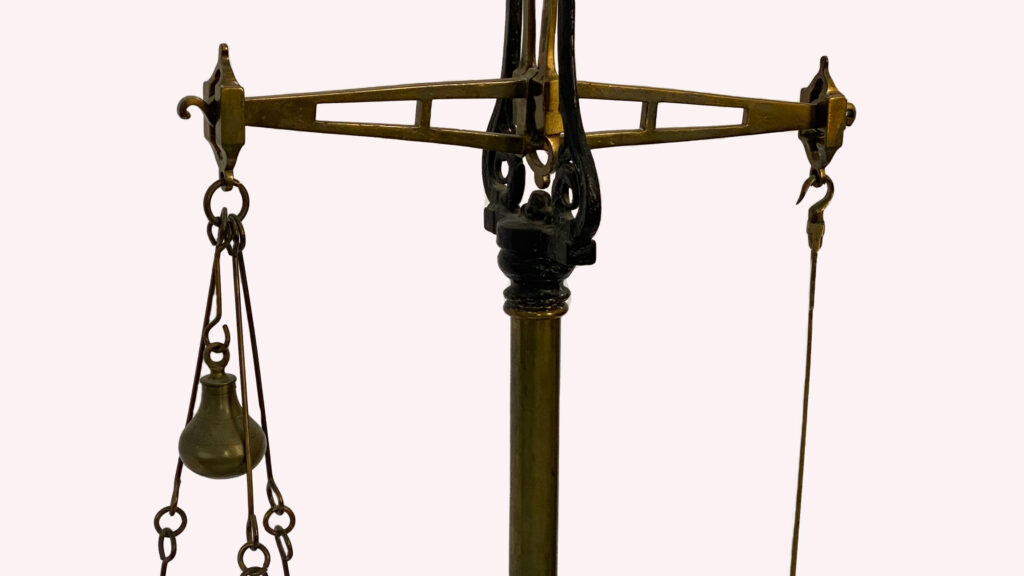
It’s been said that the people who made their fortunes during the gold rushes of the 1850s were those selling the shovels, not the ones digging. These scales were used in the store of Edmund Webb at Bathurst, whose general warehouse business prospered when the gold find at the Ophir goldfields was proclaimed in May […]
Read More…
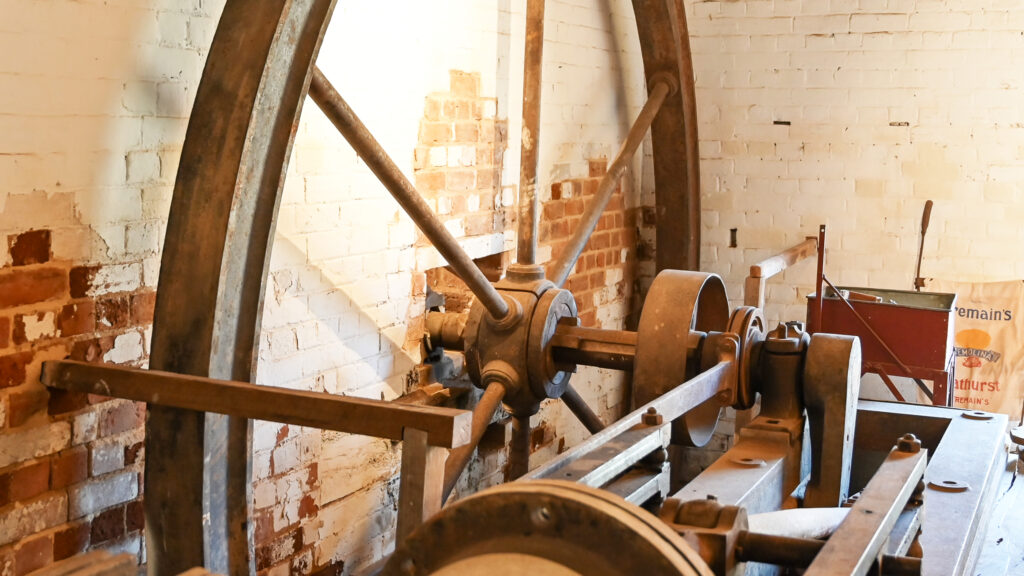
Although this engine generated less output than a modern ride-on mower, its life story reveals part of the agricultural, industrial and mining history of Rockley. The engine was installed in the western end of J.C. Stanger’s newly built flour mill in Rockley which started operation in 1862. This engine was powered by steam generated by […]
Read More…