Postmarked Wollumben
The Story Behind the Stamp
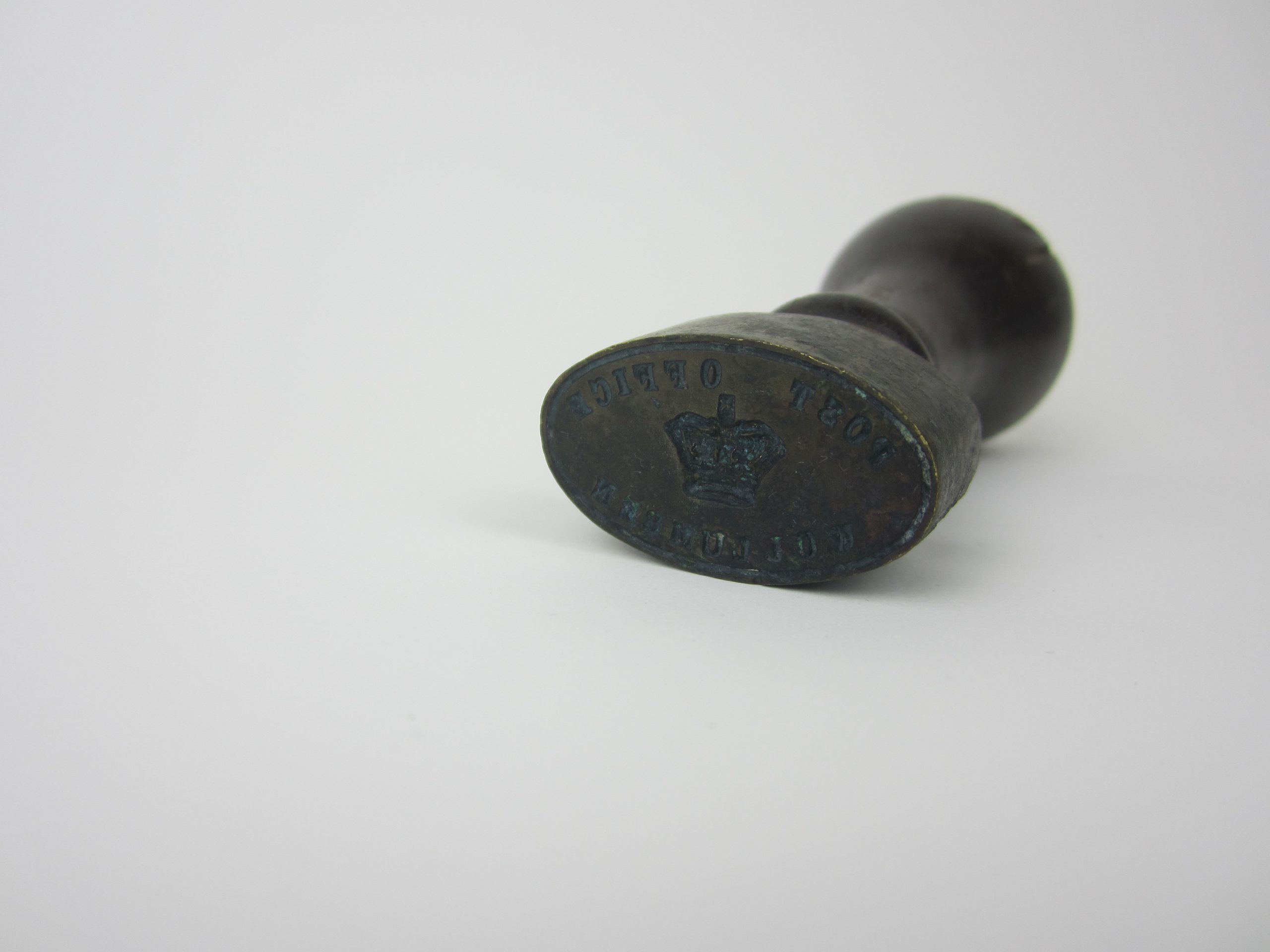
One of the oldest known artefacts relating to the European settlement of the Tweed River district is this small franking stamp. It was used at the first-established Post Office that operated from the home of Joshua (1838-1918) and Gertrude Bray (1846-1938), located near the present day town of Murwillumbah. It is a beautifully crafted hand-tool that was used to process the receipt of letters and parcels at the Post Office. But aside from its beauty and function it reveals an important story of the contact made between the Brays and Tweed River’s Aboriginal people.
The stamp bears the words ‘Post Office Wollumben’, the name by which the locality was formally first known. Wollumben referred to the Bundjalung name for one of the district’s most striking landscape features–an ancient and sacred mountain. In the nineteenth and throughout the twentieth century this mountain came to be known by its European name, Mount Warning, termed so by the explorer Captain James Cook in 1770. In recent years the name and spelling of ‘Wollumbin’ has been reinstated as the mountain’s traditional name.
Official postal services commenced in the Tweed in 1866 and with Joshua Bray acting as the Postmaster. Gertrude, Joshua’s wife, was appointed as a Postal Assistant and performed many of the day-to-day postal duties. In August 1868 the local postal district was renamed Kynnumboon, in keeping with the name the Brays gave the property they settled–also a Bundjalung word.
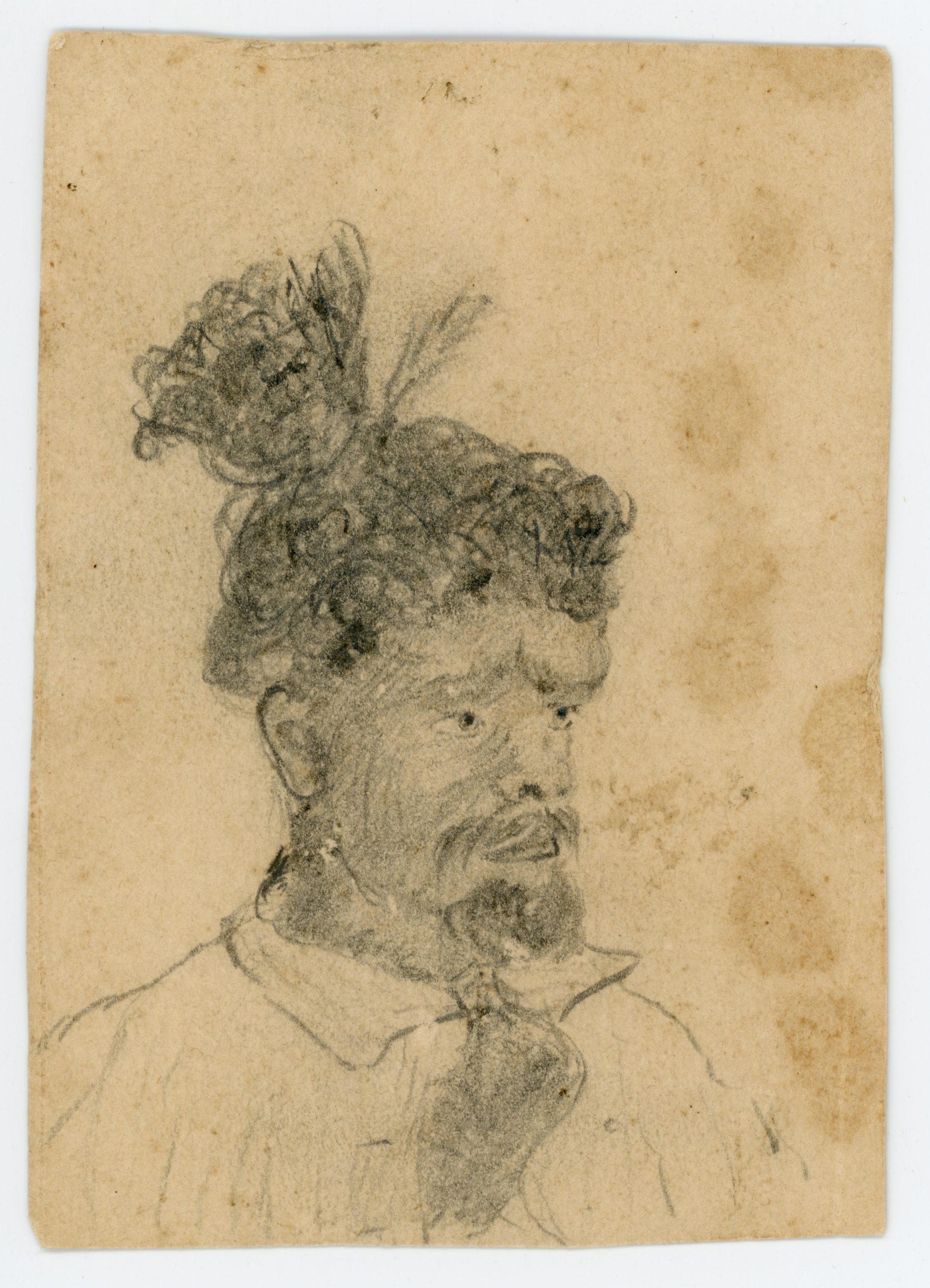
The Brays’ reference to, and reliance on, Aboriginal knowledge of the district saw them first employ Aboriginal people to carry the mail between Kynumboon and the settlement of Ballina, located at the mouth of the Richmond River and south of the Tweed. A proud man named Long Bob was one of the Brays’ mail men, in fact he was the district’s first postie. A small portrait of Long Bob sketched by Gertrude, and Joshua’s own letters, record the mail services Long Bob performed for the district’s earliest European settlers.