On a Friday afternoon in early February 1919, the members of Narrabri Red Cross Society called for a town hall meeting of the utmost urgency ‘for the purpose of coping with the influenza epidemic should it make its appearance in the town or district.’ The invitation was extended to all who wished to volunteer their […]
Read More…
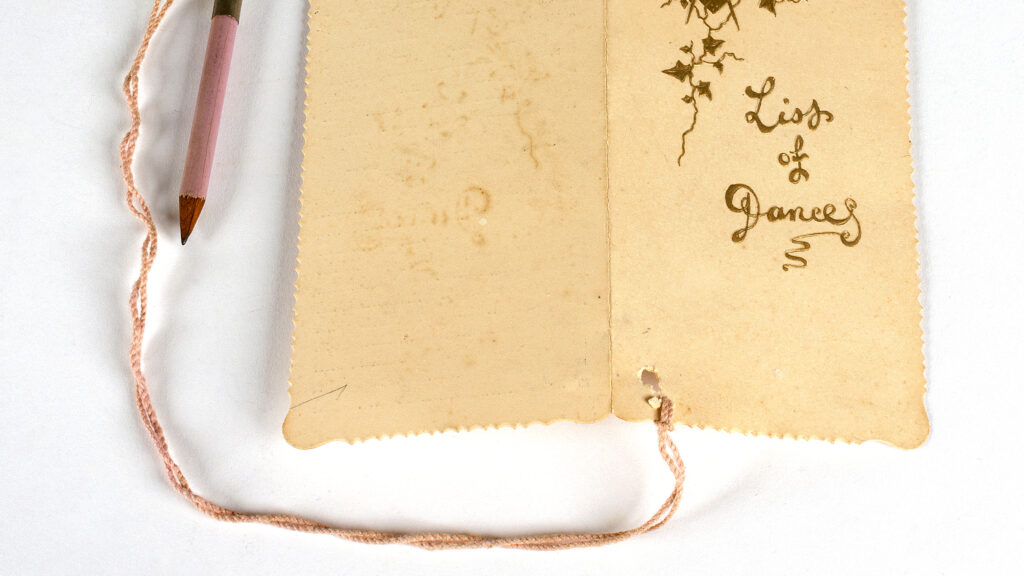
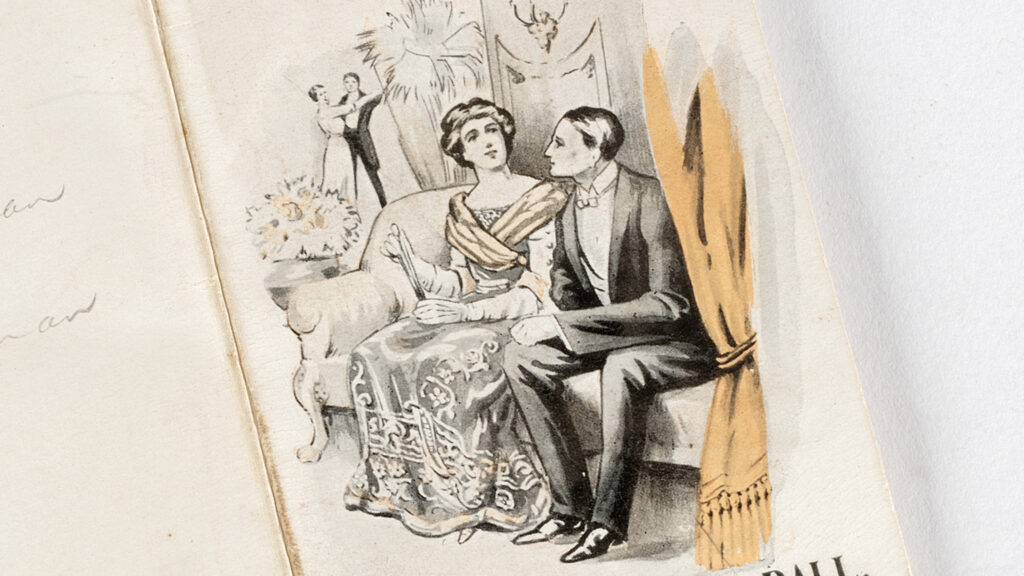
In regional towns in the early twentieth century, balls and dances were opportunities for the community to gather, be festive, and spark new friendships or romances. Days afterwards, an article in the newspaper would usually appear which detailed the night, including the decorations, the catering, and the attendees – whose names and attire were carefully […]
Read More…
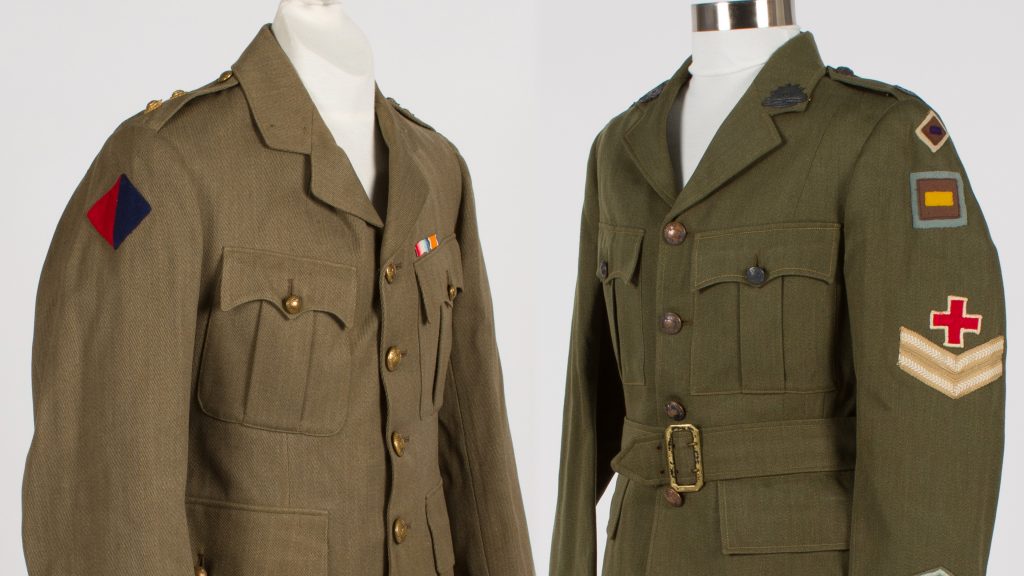
The two uniforms presented here belonged to Arthur Donald (Donald) Watson (1889–1934) and his daughter Patricia Elizabeth Watson (1920–2003) respectively and cover both World Wars with the ribbons, patches and badges detailing their service and rank. Donald’s service is a story in two parts. After serving with the 9th Regiment of the 1st Australian Light […]
Read More…

In the early 1900s, the newly minted nation of Australia was besieged by a plague of rabbits. The fleet-footed creatures knew no borders and their spread had been unwittingly assisted by pastoralists waging war on dingoes, which had removed a predator from the food chain. Used in Spring Plains, near Narrabri, in the 1920s, this […]
Read More…

World War I (1914–1918) stands as Australia’s most devastating conflict when it comes to loss of life and injuries. With a population of less than five million, a staggering 416,809 men signed up to fight. Sadly, over 60,000 of them never made it home, and another 156,000 were wounded, gassed, or captured. Volunteering for someone […]
Read More…
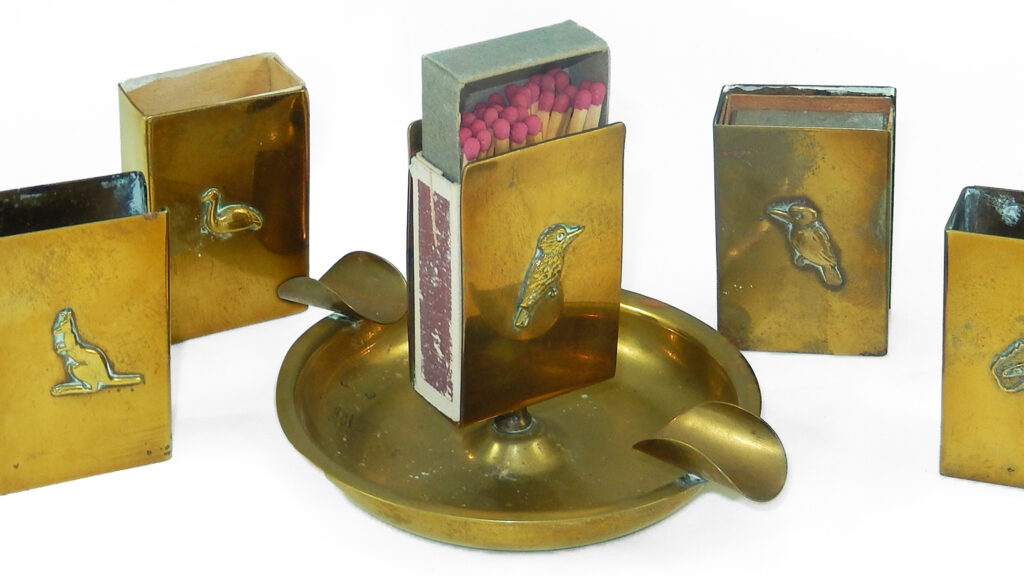
Four brass matchbox covers and an ashtray (c. 1916-1918) held in Elsie White’s bedroom at Saumarez Homestead in Armidale are a small reminder of a generation who lived and fought through World War One. They are part of a disparate collection of objects categorised as ‘Trench Art,’ an object made by people from any material […]
Read More…
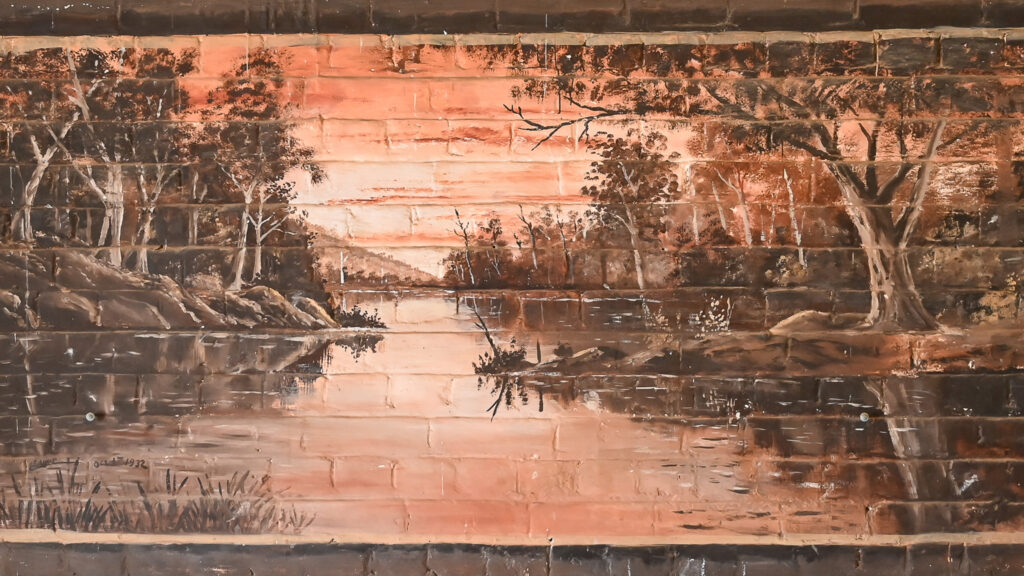
The peaceful setting depicted here is painted in oils directly onto the east wall of the old Rockley Mill. The artist, Edmund Ernest Edgar (c.1872–1965), completed the mural in October 1932 in readiness for the first meeting of the Rockley Branch of Toc H, a Christian social organisation and movement. Although the first Toc H […]
Read More…
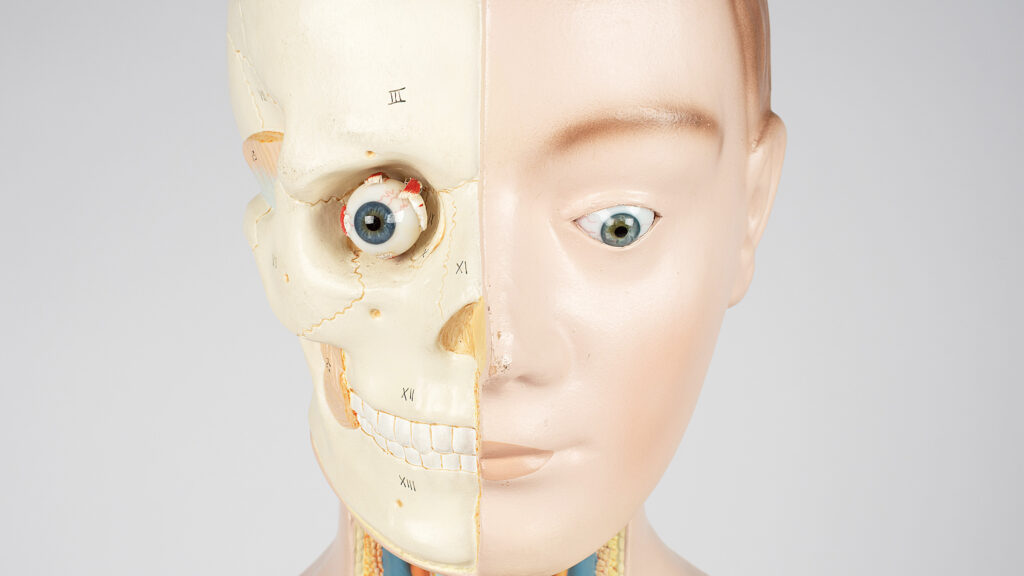
Exposed organs, popping eyeballs, and the lumpy, snaking texture of a brain might not be a sight you’d like to start the day with. However, for those in the medical profession, understanding what goes on under the skin is often essential to providing proper health care. Historically, doctors often used cadavers to provide insights into […]
Read More…
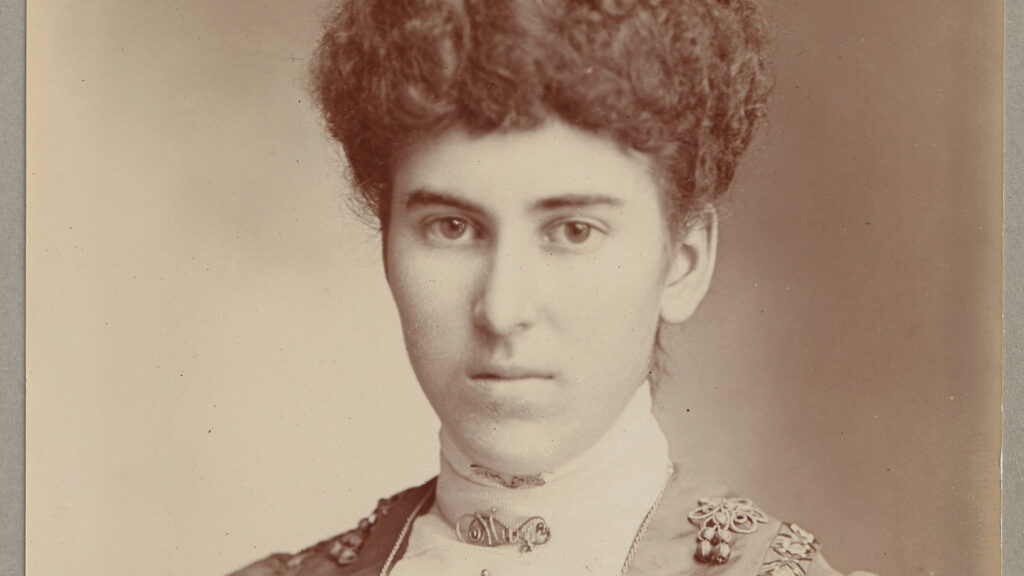
We know Ethel May Snow (née Lynn) (1900-1965) of Glen Innes in northern NSW, preferred to be called May because, in her portrait, she wears a brooch with that name at her throat. In the studio photograph, May is impeccably dressed in the idealised fashion of the 1910s. It was a style that would soon […]
Read More…