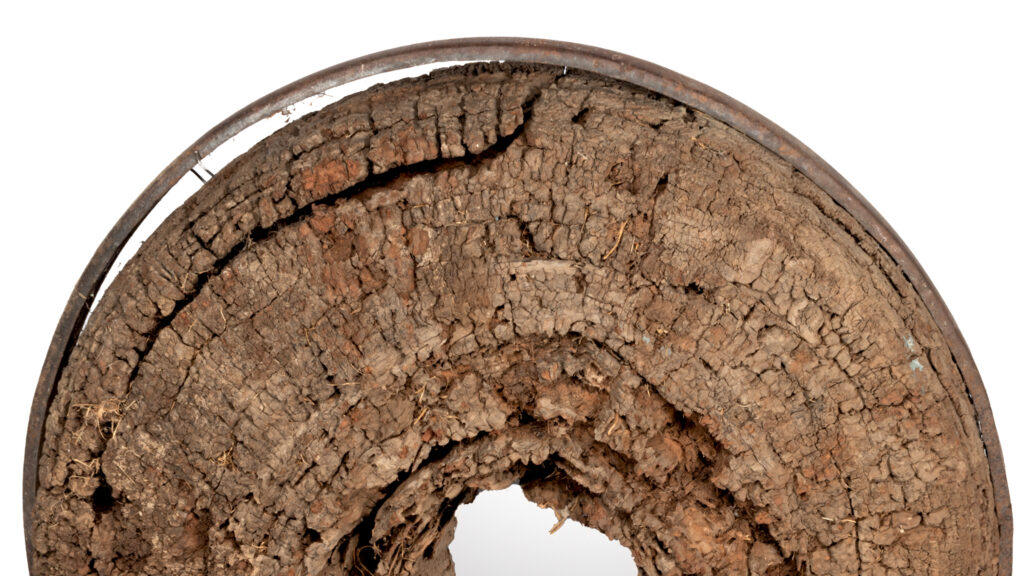
Established by one of Wee Waa’s earliest settler families in 1881, Schwager’s Sawmill grew to become one of the biggest businesses in town. Before the proliferation of the automobile, horse-drawn wagons with wheels cut from Ironbark trees wound their way through the lands of the Kamillaroi peoples, hauling logs from Pilliga Forest to Schwager’s Sawmill. […]
Read More…
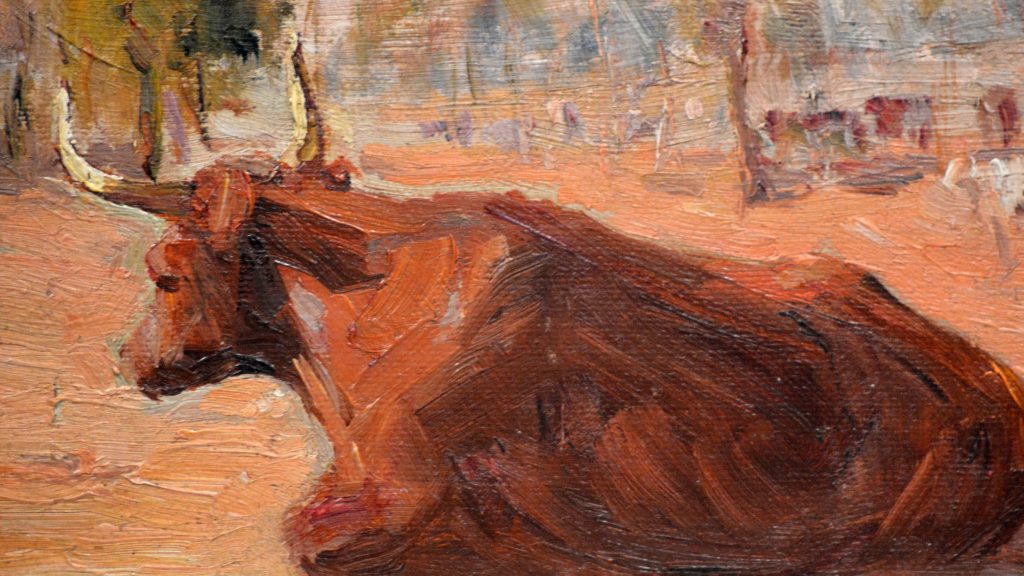
Splotches of rich auburn resting on red earth, smears wandering in small patches of shade, and above all, heat. The only thing missing is the drone of flies above the steer’s head. Bullocks Resting by John Salvana (1873-1956) captures a pastoral image that has long captivated settlers in Australia. Pastoralist art presents country life, particularly […]
Read More…
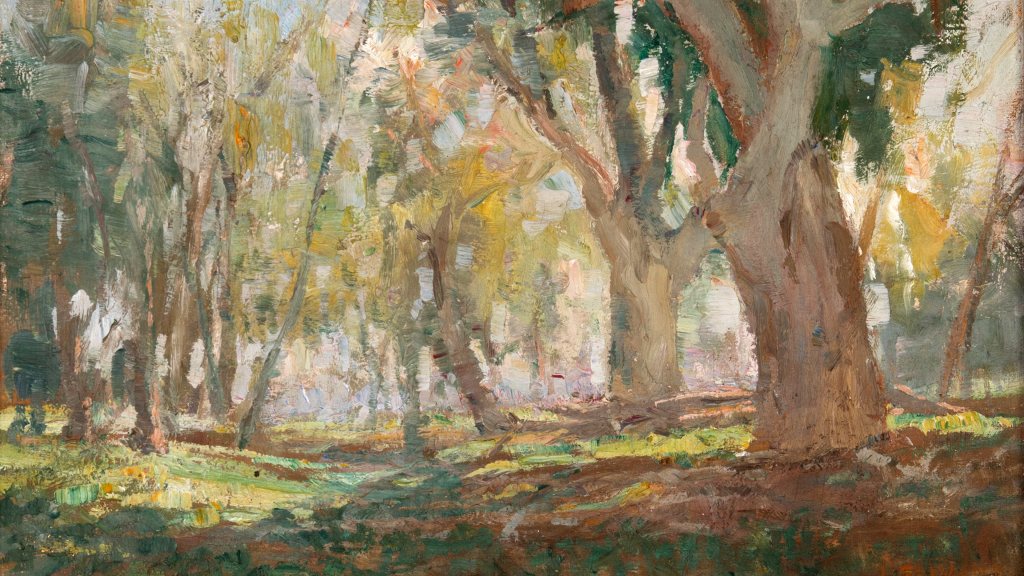
Like the artist who painted it, A Dry Billabong, Gunnedah, NSW (1950) is caught between worlds. John Salvana’s (1873-1956) portrayal of gum trees baking in the sun is typical for its time, even somewhat passé. The artwork captures the Australian landscape in an Impressionist style, a manner which had originated in France in the 1870s […]
Read More…
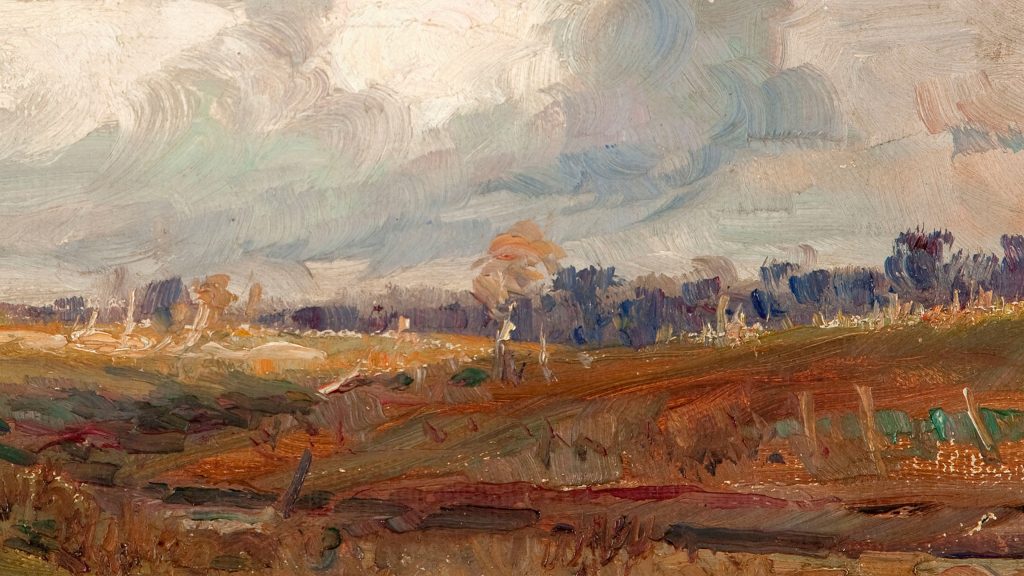
Made in 1919, a gift of over 100 paintings and works on paper led to the establishment of Tamworth’s first public art gallery. Known collectively as the Salvana Collection these works were donated by Australian artist John Salvana (1873-1956). Principally a painter, Salvana was best known for his ‘bush scenes’ or impressionistic landscapes of rural […]
Read More…

