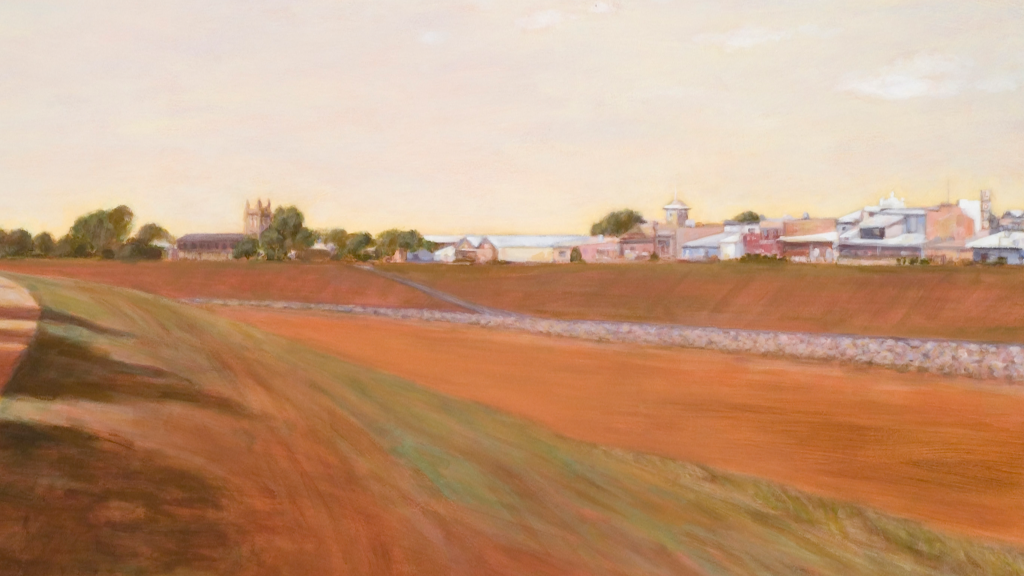
Claire Martin (1952-) has captured the curve of the levee bank as it rises above the Hunter River in Riverbank Path – Maitland (2006). The painting was commissioned for the exhibition View of Maitland from the riverbank (with apologies to Jan Vermeer and View of Delft) at Maitland Regional Art Gallery (MRAG) in 2006. Martin […]
Read More…
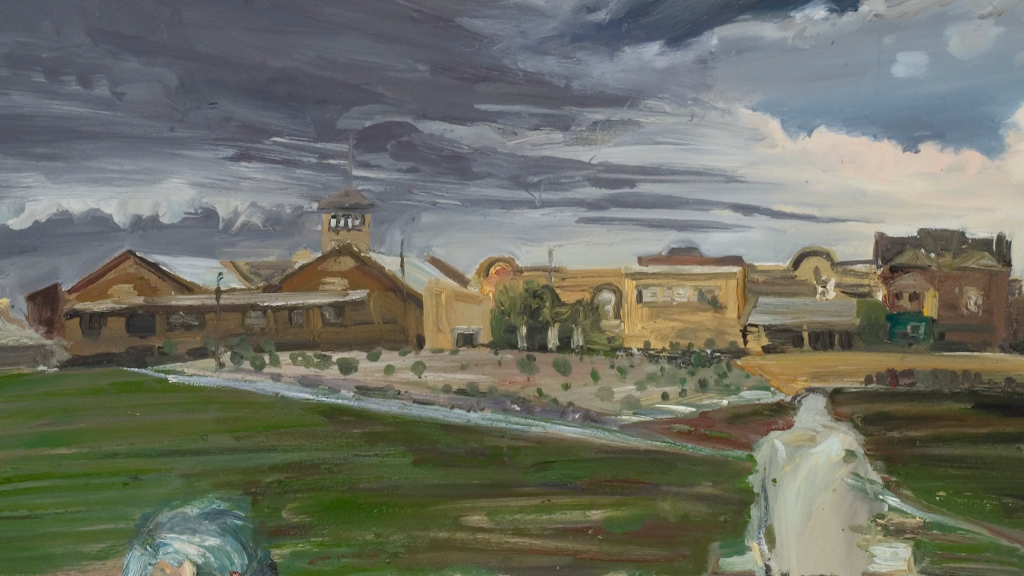
In his view across the Hunter River, Maitland – John and Leo (2006), Euan Macleod captures the energy of a gathering storm about to unleash its fury on two fellow artists painting the same view. Macleod paints the moment with an expressionistic spontaneity, using his palette knife and brush to capture the sky darkening over […]
Read More…
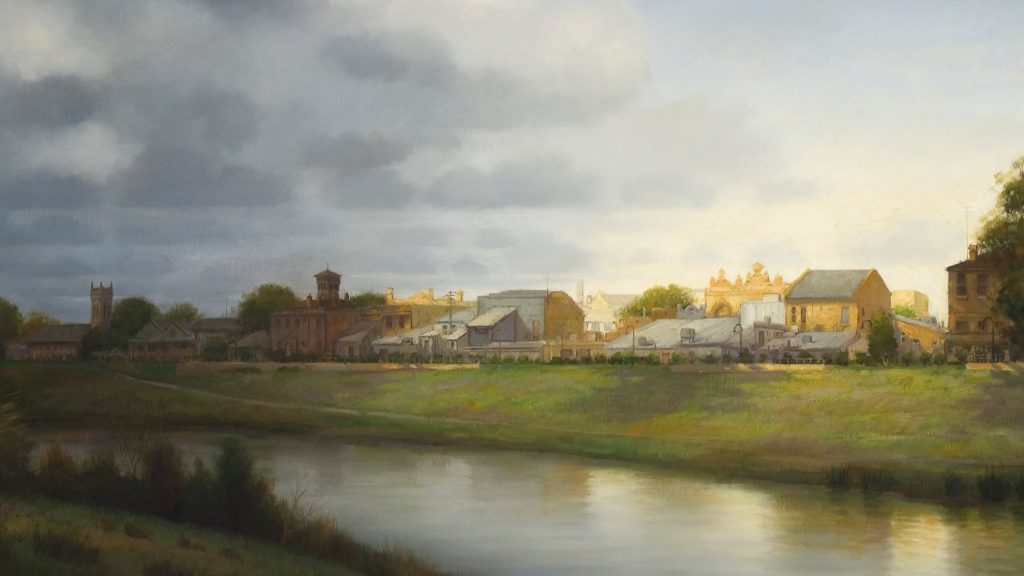
The influence of the Dutch Golden Age of painting is very clear in Alexander McKenzie’s (1971-) Cloud cover over Maitland, painted in 2006. Dutch artists of the seventeenth century conveyed pride in their flourishing cities in paintings such as View of Delft (1633) by Johannes Vermeer, which is the inspiration for this view by McKenzie. […]
Read More…

In a time when algorithms track our search history and directly advertise goods and services to us we may not appreciate that retail advertising at point-of-sale and upon packaging has a long history. Advertising mirrors, such as the one shown here, replaced tin and enamel signs, were produced for pubs, shops and milk bars and […]
Read More…
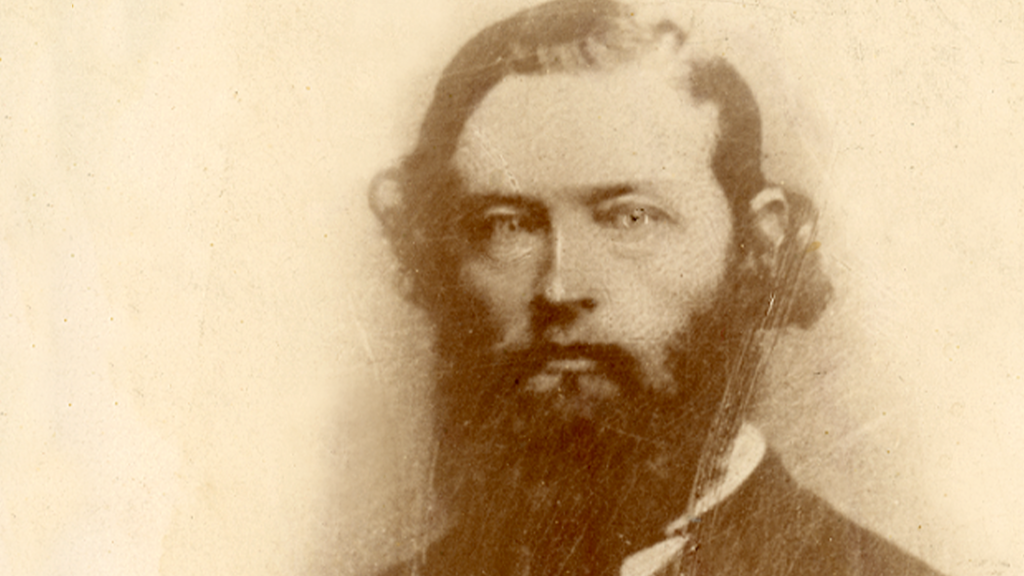
If it possible to ascribe personal characteristics based on a photograph this portrait of Julius Herman Rosler (1825-1914) – known as John – suggests a self-confident man determined to make his mark on the world, something he certainly did. One obituary published upon Rosler’s death was subtitled ‘A Romantic Career’ which somewhat downplays a life […]
Read More…
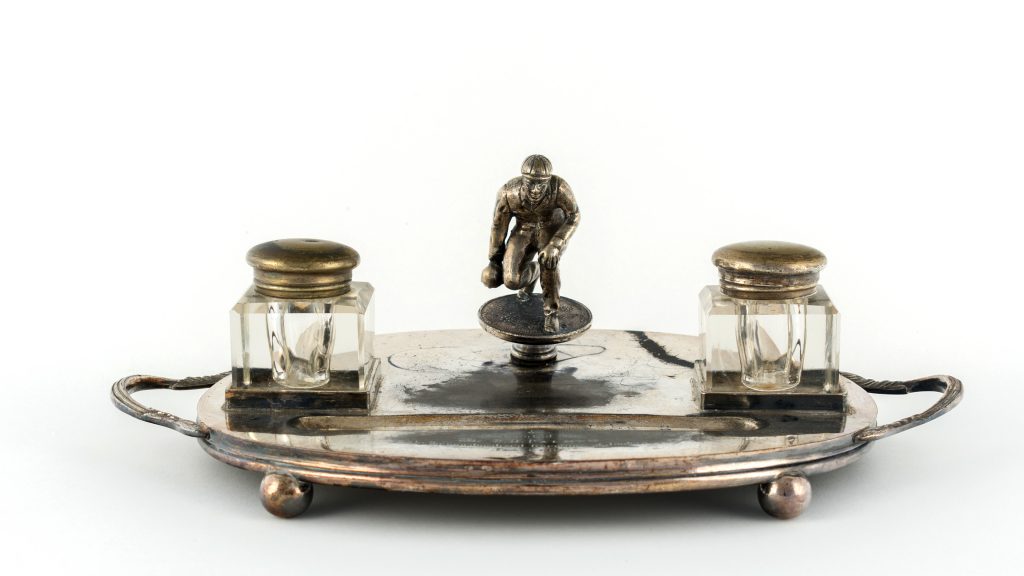
As a retirement gift this silver ink stand made by Barker Brothers of England is perfect. But it is much more than a retirement gift, it is a symbol of the high regard in which the recipient was held and the exercise of commonsense in uncertain and difficult times. The ink stand was presented to […]
Read More…
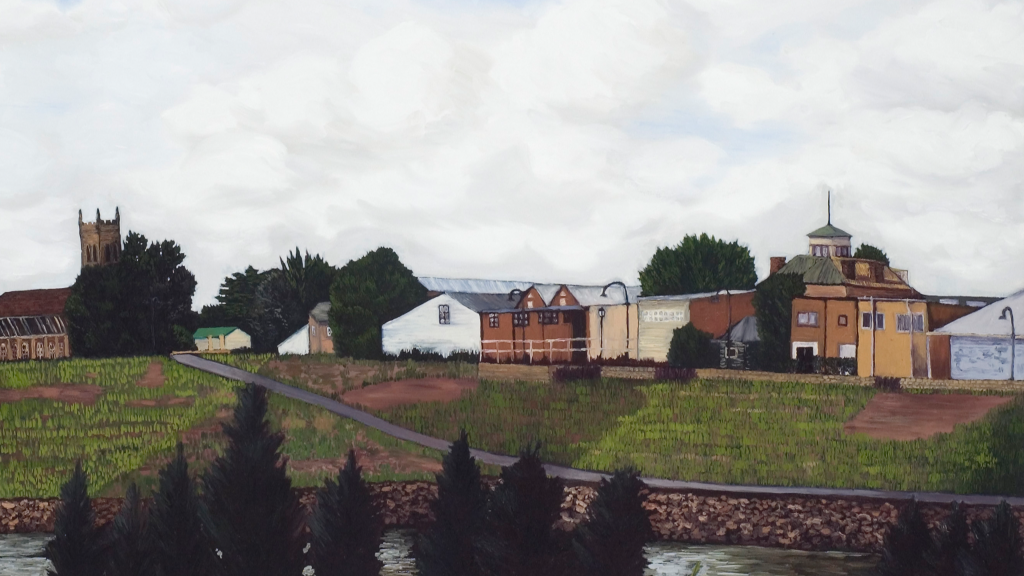
Emma Lohmann’s (1970-) A view of Maitland (after Vermeer) pays homage to Johannes Vermeer’s A view of Delft (1663), a masterpiece described by the nineteenth-century novelist Marcel Proust as ‘the most beautiful painting in the world’. Vermeer painted the waterborne entrance to the Dutch city of Delft, where visitors arrived at the city’s imposing gateway by […]
Read More…
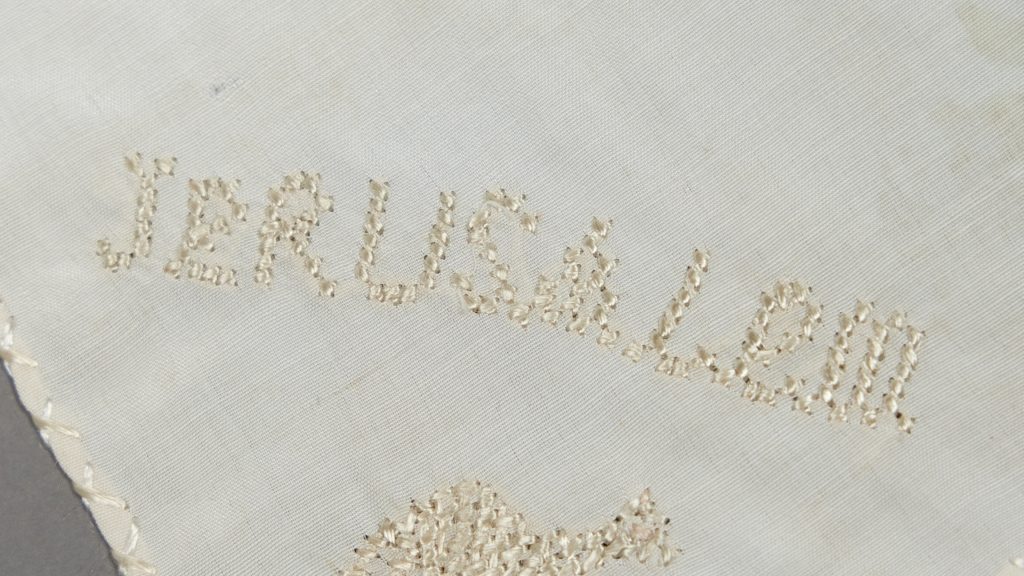
Around 120 years ago, this small handkerchief was hemmed and embroidered by a young girl from Ulladulla on the NSW south coast – Ella Mellshimer (1886-1979). Its decorative marks are simple and include the word ‘Jerusalem’, along with a single-humped camel. These symbols reflect that Ella was raised according to the Christian faith, which she […]
Read More…
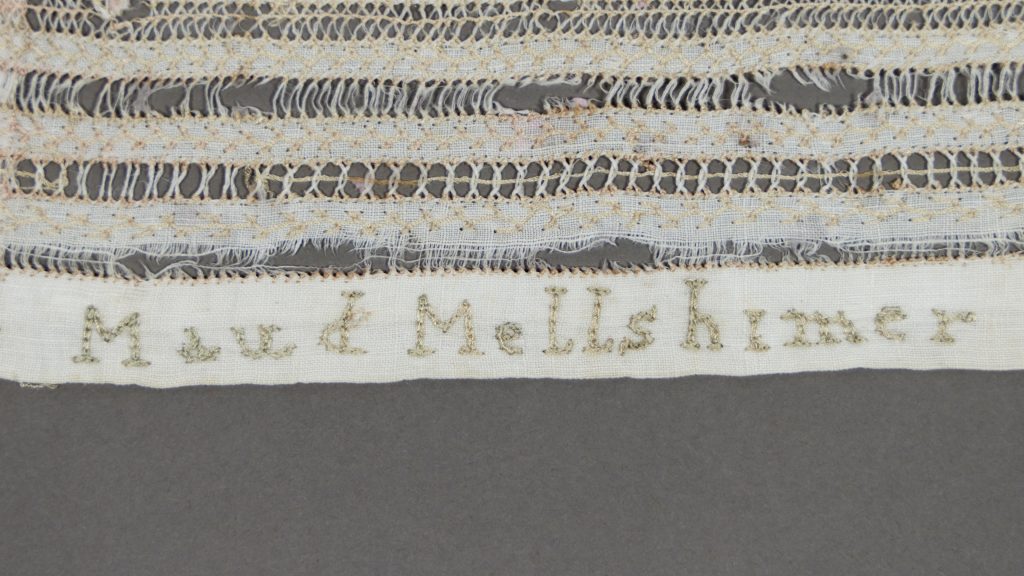
This carefully worked child’s apron was made by the small adept hands of Ada Maud Mellshimer (1888-1970). Ada, who preferred to be called Maud, was the youngest of two girls born to Mary (née Crisp) and George Mellishmer from Ulladulla, on the NSW South Coast. Maude worked the apron when a student at Ulladulla Public […]
Read More…
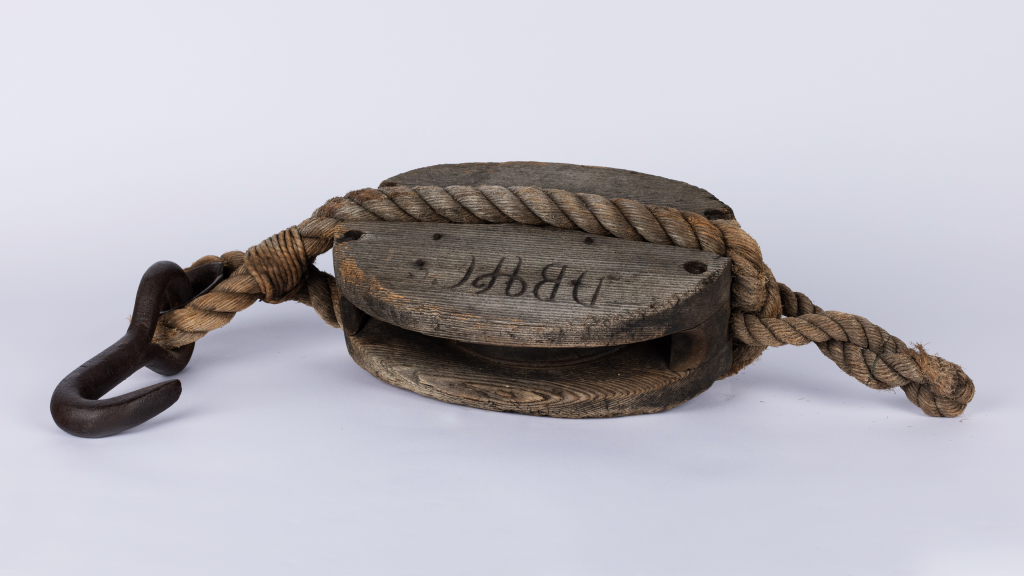
This wooden sheave block – which houses a metal wheel (the sheave) and, together with its rope (called a strop) and hook attachment, functioned as a pulley – is a relic from the celebrated nineteenth century steamship called the SS Sophia Jane (1826-1845). English-built in 1826, the Sophia Jane sailed to Australia in May 1831. […]
Read More…

